This is an example page. It’s different from a blog post because it will stay in one place and will show up in your site navigation (in most themes). Most people start with an About page that introduces them to potential site visitors. It might say something like this:

Hi there! I’m a bike messenger by day, aspiring actor by night, and this is my website. I live in Los Angeles, have a great dog named Jack, and I like piña coladas. (And gettin’ caught in the rain.)

…or something like this:

The XYZ Doohickey Company was founded in 1971, and has been providing quality doohickeys to the public ever since. Located in Gotham City, XYZ employs over 2,000 people and does all kinds of awesome things for the Gotham community.

As a new WordPress user, you should go to your dashboard to delete this page and create new pages for your content. Have fun!

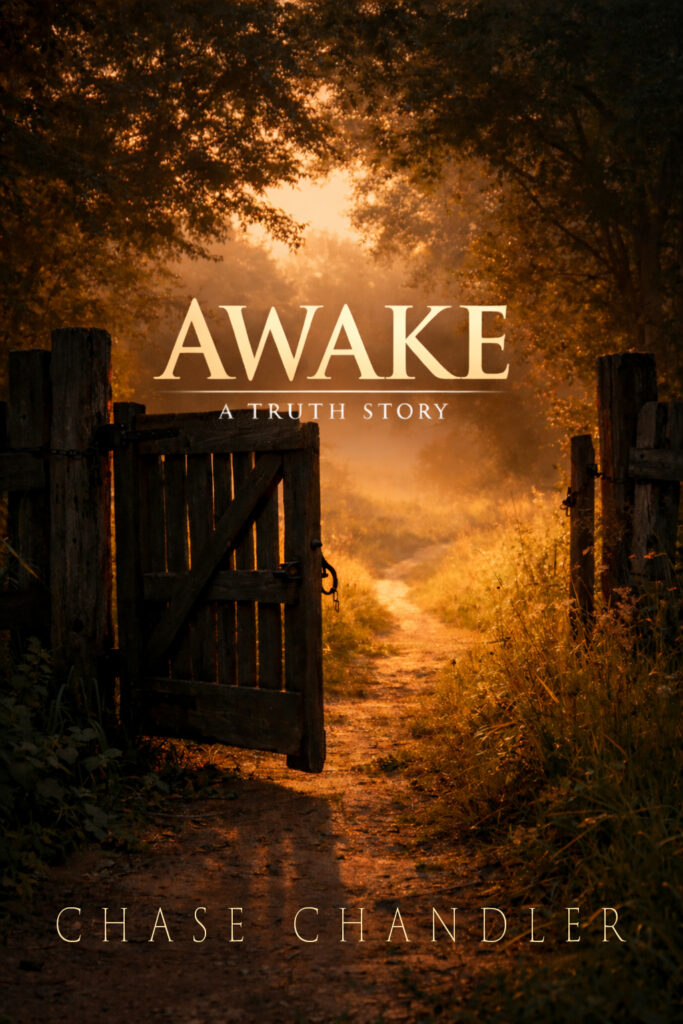
Prologue

The Field

The first time I saw him, I was in no shape to be stopping anywhere.

My hands were locked on the steering wheel. My jaw ached from clenching it. I had missed a turn ten minutes back, then another after that, and by then I was no longer pretending I had somewhere specific to be. My phone kept lighting up on the console with the same unread email I had already opened twice and still could not answer.

Workflow Coverage Documentation

Nothing urgent in the wording. Nothing dramatic. Just one more message asking how much of my work could be handed to somebody else if it had to be.

That combination has a way of putting a man on roads he does not remember choosing.

The pavement narrowed to two tired lanes running between fields gone a little wild and a line of pines standing dark and still beyond them. Late spring had filled everything in. Grass thick in the ditches. White blooms I could not name. Honeysuckle somewhere in the heat-soft air. The kind of day that looked alive and overgrown at the same time, already tipping toward summer.

I pulled over because I needed to do something besides keep driving.

For a moment I sat there with the engine off, listening to it tick as it cooled.

Then I saw the goats.

At first they looked like driftwood scattered through the grass. Then one lifted its head, another turned, and the whole field came into focus. A small herd wandered in no hurry at all, cropping at the weeds and meandering through the pasture like the day belonged to them.

And in the middle of them sat a man on an overturned bucket.

He was near the edge of a garden that looked more hopeful than finished. It had the look of something built to be useful, not pretty—patched together, still in progress, but alive.

Nothing matched. It looked used.

He was not doing much of anything. That was the part that caught me.

He was not driving the goats off. Not fixing the fence. Not even watching them closely. One pressed against his leg. Another nosed his shoulder. A third made an awkward, determined attempt to climb onto the bucket beside him.

He let it try for longer than I would have.

The bucket shifted crooked in the dirt when the little goat leaned harder, and he steadied it with his foot without looking down. Then he scratched behind its ear, absently, the way a person does when he is used to being leaned on.

I should have driven on.

Instead I sat there watching until he stood, wiped his hands on his shorts, and crossed toward the garden. The goats shifted with him as if tugged by an invisible cord. Not trained. Not frantic. Just drawn.

Before I had fully decided to, I was out of the truck and pushing open the gate.

It creaked. A few goats looked up. Most did not bother.

He turned toward me.

Early twenties, maybe. Hair cut uneven like he had done it with a bathroom mirror and no patience. A scraggly beard ran ahead of his age, thin through the mustache and fuller along the jaw, like he had never once considered whether it suited him. Plain white T-shirt. Faded shorts. Worn Crocs. Dirt worked into his hands. Grass stuck to one knee.

Nothing about him should have made me pause.

But his eyes did.

They were steady in a way that felt almost rude.

“Hey,” he said.

“Hey.”

One of the goats wandered over and sniffed my shoe.

“You don’t have food, do you?”

“No.”

“Good.”

I looked at him. “Why good?”

“Then they’ll leave you alone.”

Almost on cue, the goat lost interest and drifted off.

I rested a hand on the fence post, still not sure why I was there.

“This your place?”

He glanced around the pasture, the garden, the goats, like he was checking the edges of the question.

“Sort of.”

“What does that mean?”

He bent and tugged a weed from the soil. The top came free in his hand while the root held fast. He looked at it, crouched lower, and dug the rest out with two dirty fingers before tossing it aside.

“It means none of it’s mine.”

He straightened. “I tend to what I’m given.”

He said it the way a man says rain is coming. No ceremony in it. No glance to see what I did with it.

I waited for the explanation that usually follows a sentence like that.

None came.

He scratched lightly at the side of his jaw, as if deciding whether anything else needed saying. Then he looked at me once and said, “So what’s wrong?”

I gave a short laugh. “Nothing.”

A small grin touched one corner of his mouth.

“That’s usually not true when somebody pulls over on a back road to watch goats.”

I could have left then.

Instead I heard myself say, “My life’s kind of falling apart.”

He nodded once, like I had told him it might storm later.

“That happens.”

I stared at him. “That’s it?”

He picked up a dented watering can and tipped it slowly at the base of a plant.

“Let me ask you something.”

I said nothing.

“If everything settled down today, all the things you’re carrying, all the things you’re trying to keep from breaking, what would that give you?”

The answer came too fast. “Peace.”

He nodded as if he had expected it.

“For how long?”

I looked at him. “What?”

He set the can down. “An hour? A day? Till the next thing goes sideways?”

I felt the irritation rise before I could hide it, because I knew exactly what he meant and did not like hearing it out loud.

He looked at me then, not hard, not soft. Just direct.

“If your peace needs everything to hold together,” he said, “it isn’t peace.”

I folded my arms. “Then where does it come from?”

He held my eyes a second longer than was comfortable.

“Knowing who you are.”

He turned and went on with what he had been doing, as if his part of the conversation was over.

Around him, the goats eased back into their wandering. The garden stood there in its lopsided rows. A breeze moved through the trees at the back of the pasture and stirred the tall grass.

I stood there a moment longer, a grown man with six mouths at home and a mind full of numbers, staring at someone who looked like he had stepped clean out of every system I trusted.

I did not know his name. I did not know what had brought him to that field, or what kind of life could make a man that calm. For all I knew, he was running from something. Men did not usually end up alone with goats and a garden without a story behind them. I only knew the peace I had just seen did not fit the world I lived in.

And I did not trust it.

Chapter 1

3:07 AM

The clock beside my bed read 3:07 AM.

Again.

My heart was already pounding when I opened my eyes, as if my body had gotten there ahead of me and was waiting in the dark. My stomach carried that hollow drop of dread, like stepping off a curb you didn’t see.

I lay still for a moment, trying to out-stubborn whatever this was.

That had never worked before, but at 3:07 a man will try familiar failures before admitting he has no new ideas.

My mind was already moving.

Mortgage. Taxes. Clients. Insurance. Health. Kids.

The email from yesterday. The one from last week. The AC unit making that noise again behind the office.

The thoughts moved quickly, like a practiced hand flipping cards.

My mind did not wait for proof.

Fear only needed somewhere to land.

I rolled onto my back and stared at the ceiling, counting breaths like a man counting coins he already knew would not be enough.

In.

Hold.

Out.

That was what the internet said to do.

It didn’t help.

I reached toward the nightstand for my phone, then remembered I had started leaving it in the kitchen at night. I called it discipline. A boundary. Something spiritual.

Really it was because at 3:07 in the morning the glow of information felt like gasoline.

A thousand little ways to remember I wasn’t in charge.

My wife lay next to me, her breathing soft and rhythmic.

I envied her.

I sat up carefully and stepped into the hall.

The house was still. Even the floorboards seemed tired. I paused outside my sons’ room.

Four of them. Two bunk beds. All in the same room. They wouldn’t have it any other way.

Young men now, mostly. But in my mind they were still the boys who once filled this house with action figures and wrestling matches and loud declarations about who got to be Batman.

Their door was cracked open. The nightlight cast a warm stripe across the carpet. In the corner, a box fan hummed softly.

The three oldest were wrapped in their sheets like small cocoons.

But Shepherd was sprawled across his mattress like a fallen starfish, completely surrendered to sleep.

I stood there and watched them breathe.

In moments like that, they looked untouched by the world. No bills. No deadlines. No thinly worded email asking how much of my work could be absorbed if it had to be.

Some part of me still believed it was my job to keep them that way. Stay ahead, and the people you love never have to feel what you feel at three in the morning, lying awake with your heart pounding in the dark.

I leaned against the hallway wall and listened to the fan fill the room.

I had spent most of my adult life becoming the kind of man people trusted.

Men had called me before signing leases, before hiring staff, before risking money they could not afford to lose. I knew how to sound calm when numbers were moving. And I liked watching others win. I liked being the guy who could say, Here’s what I did. Here’s how you do it too.

None of it had ever made my chest feel calm at 3:07 AM.

Younger, I woke afraid I would not have enough.

Older, afraid I would lose what I had built.

Fear is clever.

I walked into the kitchen and poured a glass of water. The stove clock glowed. The coffee maker blinked green. My hands shook slightly. Not enough for anyone to notice in daylight. Enough for me to notice now.

I looked up and caught my reflection in the black window over the sink—older than I expected, eyes tired, shoulders carrying something invisible.

I had been a Christian most of my life.

Not casually. I believed God was real. I believed Scripture was true. I had stood in front of crowds of people for years and told them He was faithful, that peace was not circumstantial, that fear did not get the final word.

I believed those things in daylight.

At 3:07, my body made a better argument.

I set the glass down and leaned forward, palms against the cool granite.

A memory surfaced.

Years earlier, in the middle of what should have been my most successful season, my wife and I started seeing a Christian psychologist named Lou. From the outside, life looked solid—successful. Inside, I was waking up like this.

That was the deal success made with me. It gave me what I asked for, then demanded I keep feeding it.

Lou gave me something practical.

“Picture the problem,” he said. “Now put it in a small wooden box. Close the lid. Slide it under the bed. Deal with it in the morning.”

It sounded strange. It also worked.

For a while.

At 3:07 I would picture the box. Small. Wooden. Hinged lid. I would place the business inside it. Then payroll. Then contracts. Then whatever else was clawing at my mind. I would shut the lid and slide it away.

And for a little while, my thoughts would quiet.

Eventually the boxes multiplied.

Soon the space under the bed was crowded with imaginary containers full of everything that might go wrong in my life.

I felt the humiliation of that settle in. The constant assumption that if anything was going to stay standing, I needed to be the one bracing it.

I rinsed the glass.

The sound of water hitting the basin was loud in the silence.

My thoughts were louder.

Fix the business.

Fix the finances.

Fix the schedule.

Fix the health.

Fix the relationships.

Fix everything, and then you can rest.

But rest never came.

I tried again.

In.

Hold.

Out.

I turned off the faucet and stood there.

My eyes drifted to the stove clock again.

3:07.

Still.

As if time itself was waiting to see what I would do.

And then, the thought was handed back to me. The field. The goats. The garden. The young man with dirt on his hands and no visible urgency anywhere in him.

Peace comes from knowing who you are.

I still did not like the sentence.

Mostly because I still did not have a better one.

I stood there a little longer, staring at the faint reflection of myself in the glass, until the thought came clear enough to name.

I was going back.

Not because I believed him.

Because if he was wrong, I wanted to know where it broke.

And if he was right, I needed to know what it would cost.

Chase

CHANDLER

AWAKE is currently being prepared for publication and agent submission. Join the early reader list for updates, excerpts, behind-the-scenes notes, release information, and a free pre-release copy.

Awake Novel Cover

Follow the journey.